
ON-PAGE SEO CHECKLIST
Search Engine Optimization (SEO) is one of the most powerful digital marketing strategies for driving organic traffic to your website. Among the various SEO techniques, On-Page SEO plays a critical role in helping your website rank higher on Google. On-Page SEO refers to optimizing the content, HTML structure, and elements within your website pages so search engines can understand your content better and rank it higher in search results.
At Rhyolite Digital Marketing Company, we help businesses implement advanced SEO strategies that drive long-term organic growth and higher rankings on Google.
What is On-Page SEO?
On-Page SEO is the process of optimizing the elements within your website pages, such as content, keywords, titles, headings, images, and internal links, to improve visibility on search engines.
Why On-Page SEO is Important for Google Rankings?
On-Page SEO is essential because it directly affects how search engines understand and rank your content. Google prioritizes websites that provide high-quality, relevant, and useful content to users. By optimizing your pages using a structured SEO checklist, you can significantly increase your chances of ranking on the first page of Google.
On-Page SEO Checklist for Higher Rankings
Here is the ultimate step-by-step On-Page SEO checklist used by professional SEO agencies like Rhyolite.
1. Keyword Research and Search Intent
Every successful SEO strategy starts with proper keyword research. You must identify the keywords your audience is searching for and optimize your content around them. Tools like SEMrush, Ahrefs, and Google Keyword Planner can help discover high-value keywords.
2. Optimize Title Tags
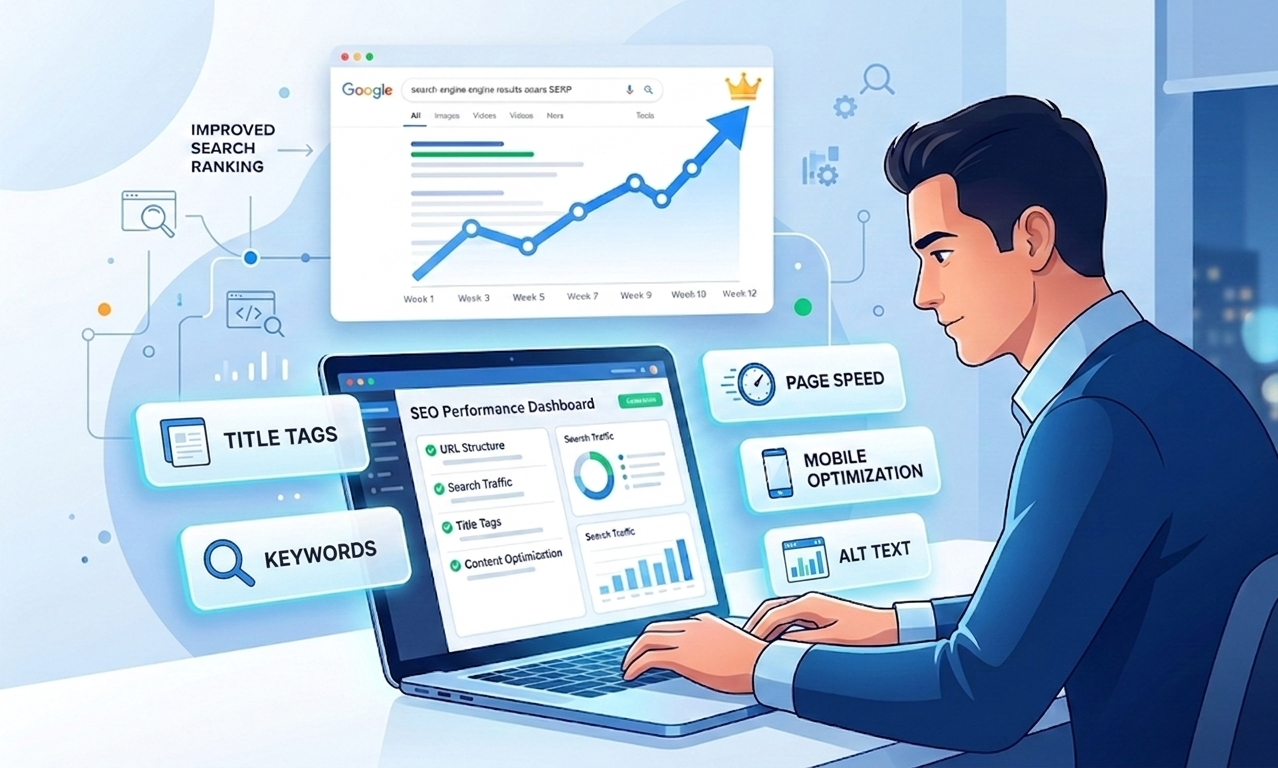
The title tag is one of the most important On-Page SEO factors because it tells search engines and users what your page is about. Placing the keyword near the beginning of the title can improve relevance and search rankings.
3. Write an SEO-Optimized Meta Description
A meta description is the short summary that appears below the title in search results. While it may not directly impact rankings, it plays a major role in improving click-through rates. A good meta description include the main keyword, and clearly explains what the page offers while encouraging users to click.
4. Use Proper Heading Structure
Heading tags help organize content and improve readability for both users and search engines. Each page should use sections and sub-sections. A well-structured heading hierarchy helps search engines understand the content and improves overall SEO.
5. Create High-Quality SEO Content
High-quality content is one of the most important factors for SEO success. Google favours content that is informative, relevant, and valuable to users. Creating long-form, well-structured content that answers user questions and naturally includes relevant keywords can significantly improve search rankings and website authority.
6. Optimize URL Structure
A clean and keyword-rich URL helps search engines understand the topic of a page. URLs should be short, descriptive, and include the primary keyword. Avoid unnecessary parameters or numbers to maintain a simple and SEO-friendly structure.
7. Internal Linking Strategy
Internal links connect pages within your website and help search engines discover and understand your content better. Linking to related pages using descriptive anchor text improves site structure, distributes page authority, and enhances user navigation.
8. Optimize Images for SEO
Images improve both user experience and SEO when properly optimized. Compressing images, using descriptive file names, adding ALT text, and using modern formats like Web can improve page speed and help search engines understand image content.
9. Improve Page Speed
Page speed is an important Google ranking factor. Websites that load slowly can lead to poor user experience and higher bounce rates. Optimizing images, enabling caching, using a CDN, and minimizing code can significantly improve website performance.
10. Mobile-Friendly Website
Since Google uses mobile-first indexing, your website must be optimized for mobile devices. A responsive design, fast loading speed, readable fonts, and properly scaled images ensure a smooth mobile experience.
11. Ensure Proper Indexing
Proper indexing ensures that search engines can crawl and display your pages in search results. Submitting a sitemap to Google Search Console, fixing crawl errors, checking robots.txt, and avoiding duplicate content are essential steps for proper indexing.
How Rhyolite Helps Businesses Rank Higher on Google
At Rhyolite Digital Marketing Company, we specialize in delivering data-driven SEO strategies that help businesses achieve sustainable online growth.
Our SEO services include:
- Complete website SEO audit
- Keyword research and strategy
- On-Page SEO optimization
- Technical SEO improvements
- High-quality backlink building
- Content marketing and blog optimization
- Local SEO and Google Business optimization
With our expertise in advanced SEO techniques and search engine algorithms, we help businesses increase visibility, organic traffic, and conversions.
CONCLUSION
On-Page SEO is the foundation of every successful SEO strategy. By implementing the complete On-Page SEO checklist, you can significantly improve your website’s search engine rankings and attract more organic traffic. SEO is not a one-time task — it requires continuous monitoring, optimization, and updates.
If you want to rank higher on Google and grow your business online, partnering with an experienced SEO agency like Rhyolite Digital Marketing Company can make a huge difference.