
In today’s digital ecosystem, choosing the right type of website architecture is foundational to your brand’s online presence. Whether you’re launching a new business or planning a website revamp, understanding.
Static vs. Dynamic websites helps you make smarter decisions — from performance and scalability to content management and future growth.
What Are Static Websites?
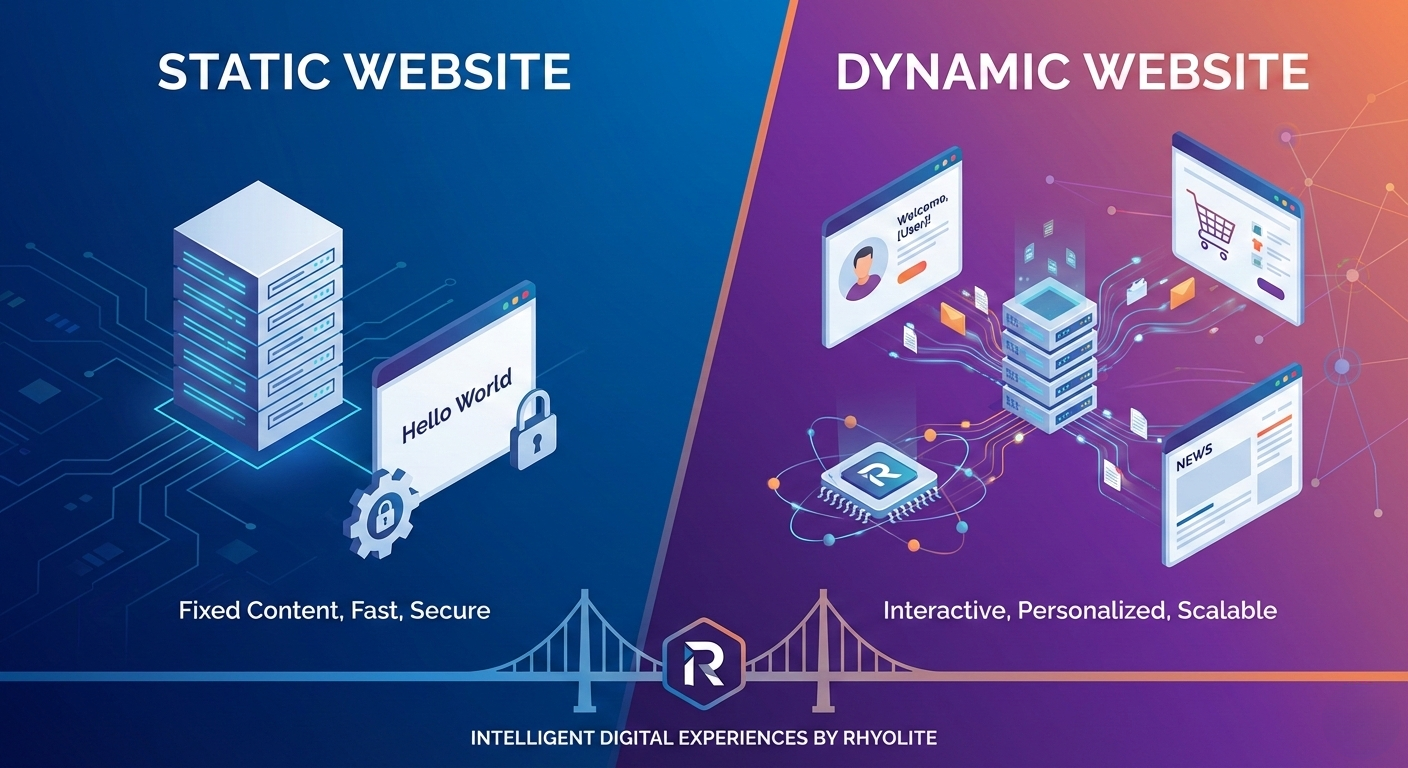
A Static website delivers pre-built pages that are fixed and unchanged unless manually updated by a developer or designer. These pages are stored exactly as they’re served, meaning every user sees the same content every time they visit.
Best For:
- Business brochure sites
- Portfolio pages
- Landing pages
- Small informational sites
What Are Dynamic Websites?
Unlike static sites, Dynamic websites generate content on the fly using server-side scripts and databases. This means the content can change depending on the user, time, preferences, or interaction — enabling interactive features like user accounts, pricing updates, search filters, and more.
Best For:
- E-commerce stores
- Portals with login systems
- Blogs with frequent updates
- Web apps and interactive platforms
Static vs. Dynamic: The Key Differences
The key difference between static and dynamic websites lies in how their content is created and delivered to users. A static website shows the same, fixed content to every visitor and only changes when a developer manually edits the code. This makes static sites simple, fast-loading, and cost-effective to host, but less flexible when frequent updates or interactive features are needed. They are ideal for basic business profiles, portfolios, or landing pages where information doesn’t change often.
In contrast, a dynamic website can display different content based on user actions, preferences, or real-time data. It relies on server-side processing and databases to generate pages on demand. This allows features like user logins, e-commerce functionality, blogs, dashboards, and personalized content. While dynamic websites are more powerful and scalable, they typically require higher development effort, maintenance, and stronger security management.
Static Advantages at a Glance
- Speed & Performance – Pages load faster because they don’t rely on server-side processing.
- Security – With no database or dynamic files, static sites are inherently more secure.
- Lower Cost – Simple hosting and maintenance make static sites budget-friendly.
When static is ideal: Brochure sites or businesses that need a fast, reliable web presence without ongoing content changes.
Dynamic Advantages at a Glance
- Content Flexibility – Use a CMS to update without coding.
- User Engagement – Personalization, user accounts, and real-time interaction.
- Scalable Features – Works well for e-commerce and applications that grow over time.
When dynamic is ideal: E-commerce brands, news portals, or businesses requiring frequent updates and personalized experiences.
How to Choose the Right One for Your Business
At Rhyolite – Best Digital Marketing Company in Bangalore, we always begin with your business goals
Final Thought
There’s no one-size-fits-all answer to choosing static vs. dynamic websites — but with clear goals and the right expertise, you can build a site that delivers impact.Whether you’re launching your first site or scaling an enterprise portal, Rhyolite’s team can help craft a solution that fits your brand, audience, and growth plan.